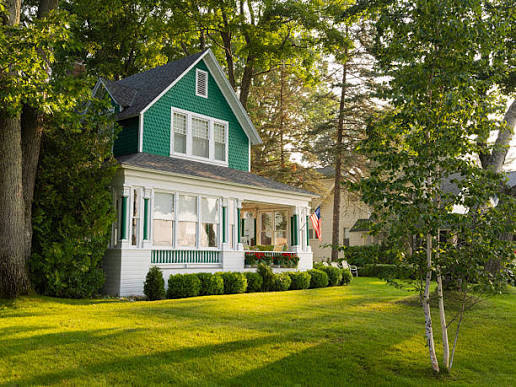
For millions of Americans, homeownership is considered a key path to building wealth and financial security. Studies have shown that owning a home can produce personal benefits like improved health and stronger academic achievement for children and social benefits like greater community stability.
The national homeownership rate was 65.7% in the fourth quarter of 2025, the same as the fourth quarter of 2024 and near the 25-year average of 66.3%. Yet the relative consistency of the rate masks mounting affordability pressures. Home prices have surged 50% since 2020, supply remains inadequate, and nearly 21 million homeowners spend more than 30% of their income on housing. Affordability concerns extend beyond mortgage costs: even those who own their homes outright have seen non-mortgage costs—like property insurance and utilities—rise 35% since 2019.
Recent homeownership trends underscore the depth of these affordability challenges. Lower-income and older homeowners face particular strain, and racial and ethnic disparities in homeownership remain wide.
The Bipartisan Policy Center’s J. Ronald Terwilliger Center for Housing Policy works to make homeownership more attainable, identifying ways to reduce barriers for prospective homeowners and helping existing homeowners manage the rising costs of owning a home.
Modest gains among those 35 and under; losses among those 35 to 44
Over the past year, the quarterly homeownership rate for those 35 and under rose to 37.9% from a five-year low of 36.3%, a modest improvement likely attributable to easing mortgage rates. Still, younger buyers face significant barriers. The homeownership rate among those ages 35 to 44 was 60.9% in the fourth quarter of 2025, nine percentage points below the 25-year quarterly high of 70.1% in the first quarter of 2005.
Researchers continue to debate whether first-time homebuyers are waiting until later in life to buy because of challenges in the market, citing differing data sets and definitions. Some estimates put the median age at 40, up from 33 in 2020, while others find it closer to 33 and largely unchanged over the past decade.
ho can buy in the USA
There are no restrictions on who can buy property in the USA; you don’t need to be a citizen or resident, but this doesn’t give you a direct right to permanent residency. To live in the USA, you’ll need the appropriate visa or residence status.
You’ll need to apply to the Internal Revenue Service (IRS) for a Taxpayer Identification Number (ITIN), and if you require a mortgage, you’ll need to open a US bank account
The buying process in the USA
- Once you’ve found the property you’d like to purchase, put in a written offer.
- This offer includes details such as purchase price, contingencies, and the proposed closing date.
- Carry out appropriate due diligence, including conducting a title search, ensuring the property complies with local zoning and land-use regulations, and performing a property inspection.
- Once your offer is accepted, both parties sign a legally binding purchase agreement, outlining the terms and conditions of the sale.
- You’ll also need to submit an earnest money deposit, typically 1-3% of the purchase price.
- To officially transfer ownership of the property, you’ll need to sign the title deed and record it with the local county recorder’s office, sign any home loan documents, set a closing date, and pay the remaining purchase balance, including fees and taxes.
Fees and taxes in the USA
Overseas buyers need to consider the Foreign Investment in Real Property Tax Act, a levy that requires foreign sellers to pay tax on gains from the sale of US real estate. The buyer is typically responsible for withholding the tax, usually 15%, and sending it to the IRS.
Homeowners stay put longer, locked in by low interest rates
Property transfer tax varies by state, ranging from 0% to 4% of the purchase price.
Title insurance varies based on property location, purchase price, and the extent of coverage, but it is typically 0.5% to 1% of the purchase price.
Attorney and legal fees usually range from $500 to $2,000, depending on the state, and are split between the buyer and seller.
Escrow fees are roughly 1% of the purchase price.
Estimates vary, but data from the fourth quarter of 2025 suggest an average homeownership tenure of 8.5 years, a 25-year high. Higher interest rates likely contribute to a lock-in effect, discouraging homeowners with low rates from selling. Homeownership tenure varies widely by region and market, ranging from an average of 13.3 years in Massachusetts to 4.8 years in Maine.
Cost burdens reach a 15-year high, straining older and lower-income homeowners
According to research from the Harvard Joint Center for Housing Studies, the number and share of cost-burdened homeowners has increased across all income groups to 20.7 million households, a 15-year high representing nearly 25% of all homeowners.
Their report finds that homeowners earning less than $30,000 per year face the highest and fastest-rising cost burden rates. Households with severe cost burdens—those spending 50% or more of their income on housing—face especially precarious circumstances. Severely cost-burdened households are forced to spend 57% less on health care and 51% less on food than households without cost burdens.
Older homeowners also face mounting pressure, as data from the Joint Center report shows. More than 27% of homeowners ages 65 and older are cost-burdened, and this group accounted for nearly half of the overall increase in cost-burdened homeowners between 2019 and 2023. This trend will likely continue as retirees or near-retirees rely on fixed or declining incomes to cover rising housing costs.
Cost-burden rates also remain especially high among single-earner households and households of color.
Racial gaps in homeownership widen, including among younger Americans
There are significant gaps in homeownership rates between racial and ethnic groups. In the fourth quarter of 2025, the white homeownership rate stood at 75.1%, compared with 63.1% for Asian, Native Hawaiian, and Pacific Islander households; 48.7% for Hispanic households; and 44.2% for Black households. The racial homeownership gap has widened among younger Americans in the last three years. Among those 44 and younger, Black households were only half as likely to own a home as their white counterparts in 2025.
Mortgage denial rates follow a similar pattern. While the mechanisms underlying differential mortgage denial rates by race and ethnicity are complex, data from the National Fair Housing Alliance indicates that across home purchase, refinance, and home improvement loans, the 2024 denial rate for white applicants was 16.5%—compared with 27.1% for Black applicants; 22% for Hispanic applicants; and 26.2% for Asian, Native Hawaiian, and Pacific Islander applicants.
Lower costs make the Midwest a more accessible market, while coastal states lag
The Midwest has the nation’s highest regional homeownership rate at 71.3%, likely reflecting lower home prices and overall costs of living. Rates are lower in the Northeast and West. In 2024, New York had a homeownership rate of 52.7% and California followed at 55.3%.
Cost pressures on multiple fronts compound high home prices
Rising home prices remain a central barrier to homeownership. As a result of higher home prices, the annual salary needed to afford a median-priced home, with a 20% down payment, has increased more than 78% since 2020.
Aspiring homeowners also face elevated interest rates, steep down payments, and mounting non-mortgage costs. Together, these pressures have pushed homeownership out of reach for a growing share of Americans.
Homeownership itself has grown more expensive. Median monthly housing costs rose 18% between 2019 and 2023. While mortgage rates have eased recently, sharp increases in non-mortgage costs—including property insurance premiums, property taxes, utilities, and home repairs—continue to strain household budgets.
Bipartisan legislation points to a path forward
To support sustainable homeownership, the Bipartisan Policy Center’s J. Ronald Terwilliger Center for Housing Policy is working to advance legislative initiatives like the Neighborhood Homes Investment Act that would expand the supply of affordable homes available for purchase. The Bipartisan Policy Center is also strongly supportive of the ROAD to Housing Act and the Housing for the 21st Century Act, which include provisions to expand access to small-dollar mortgages, support manufactured and modular housing, reform housing counseling programs for prospective homeowners, and provide low-income homeowners with grants for cost-saving home repairs and modifications.
For the first time since 2023, most Americans think it’s a better idea to buy a home than rent or move in with relatives.
Fifty-three percent of respondents surveyed by Bank of America said it was better to buy a home now, up from 48% last year and 47% in 2024. Other measures of attitudes toward homeownership, such as the percentage of respondents who say a home is a valuable investment and provides stability, also improved.
The finding underscores how perceptions of homeownership are changing as housing becomes slightly more affordable. While it’s still far more difficult to afford a home now than it was pre-pandemic, home price appreciation in much of the country has dropped below inflation and wage growth, and mortgage rates are slightly lower now than during the past three summers.
As of May, the median home in the US was listed for $429,500, according to Realtor.com. That’s down slightly from $440,000 last year, but 34% higher than May 2019, when the median was $319,500.
Affordability remains a challenge for many buyers. Just 32% of survey respondents said they were confident they could buy a home this year, and a growing percentage cited high prices or high rates as reasons for delaying a purchase.
Read more: How to get the lowest mortgage rates right now
Mortgage rates have been hovering around 6.5% in recent weeks, and recent home sales and contract signing data suggests more buyers are coming off the sidelines than last spring. Still, Bank of America found that a majority of prospective buyers are holding out for a better entry point. Seventy-one percent of potential buyers say they expect prices and rates to fall and are waiting to buy.
They could be in for a long wait, despite a tenuous ceasefire in Iran. Mortgage rates jumped on Monday — averaging 6.66%, according to Mortgage News Daily — as formal talks between the two countries sputtered. And even if Iran and the US reach a final deal, interest rates react quickly to negative shocks but take much longer to adjust to improving conditions, mortgage experts told Yahoo Finance.
“I think this [memorandum of understanding] is going to need to hold for at least this initial 60 days, and then proceed on longer for it to really start having a positive effect on mortgage rates,” said Chris Padley, a mortgage sales manager at Gateway Mortgage in Jenks, Okla.